
At FOSS Asia 2026 (Mar 8-10, Bangkok), note 3:
Mitch Altman gave a talk titled “Hackerspaces as Small-Scale Production and Repair Networks for Low-Cost Open Hardware.”
Mitch is a co-founder of Noisebridge in San Francisco (one of the first hackerspaces in the US, est. 2008), inventor of TV-B-Gone, and has been called “the Johnny Appleseed of hackerspaces” by Make magazine. He’s been traveling the world for years encouraging people to start hackerspaces and teaching electronics workshops.
What is a hackerspace?#
A hackerspace is a physical place with a supportive community for exploring and doing what one loves. That’s it. No corporate structure required, no specific equipment list, no formal curriculum.
They are community-operated spaces where people share resources, tools, and knowledge. Think of it as a workshop where you have access to tools you can’t justify buying for yourself (laser cutters, 3D printers, oscilloscopes, soldering stations), but more importantly – access to people who know how to use them and are happy to teach you.
The concept traces back to 1995 Berlin with C-Base, the world’s first hackerspace. The movement grew significantly after 2007, when hackerspaces.org was started as a wiki to document patterns on how to start and run them. Today there are over 2,500 hackerspaces listed on the wiki, with around 790 marked as active worldwide.
Why this matters#
The core of the talk is in the title: “Small-Scale Production and Repair Networks for Low-Cost Open Hardware.” This is not just about hobby electronics. It’s about:
- Right to repair. Having a place where you can fix things instead of throwing them away. A community where someone can teach you how to replace a capacitor on a board instead of buying a new device.
- Local production. Small-batch manufacturing of open hardware designs. A hackerspace with a few 3D printers and a laser cutter can produce functional parts, enclosures, and tools.
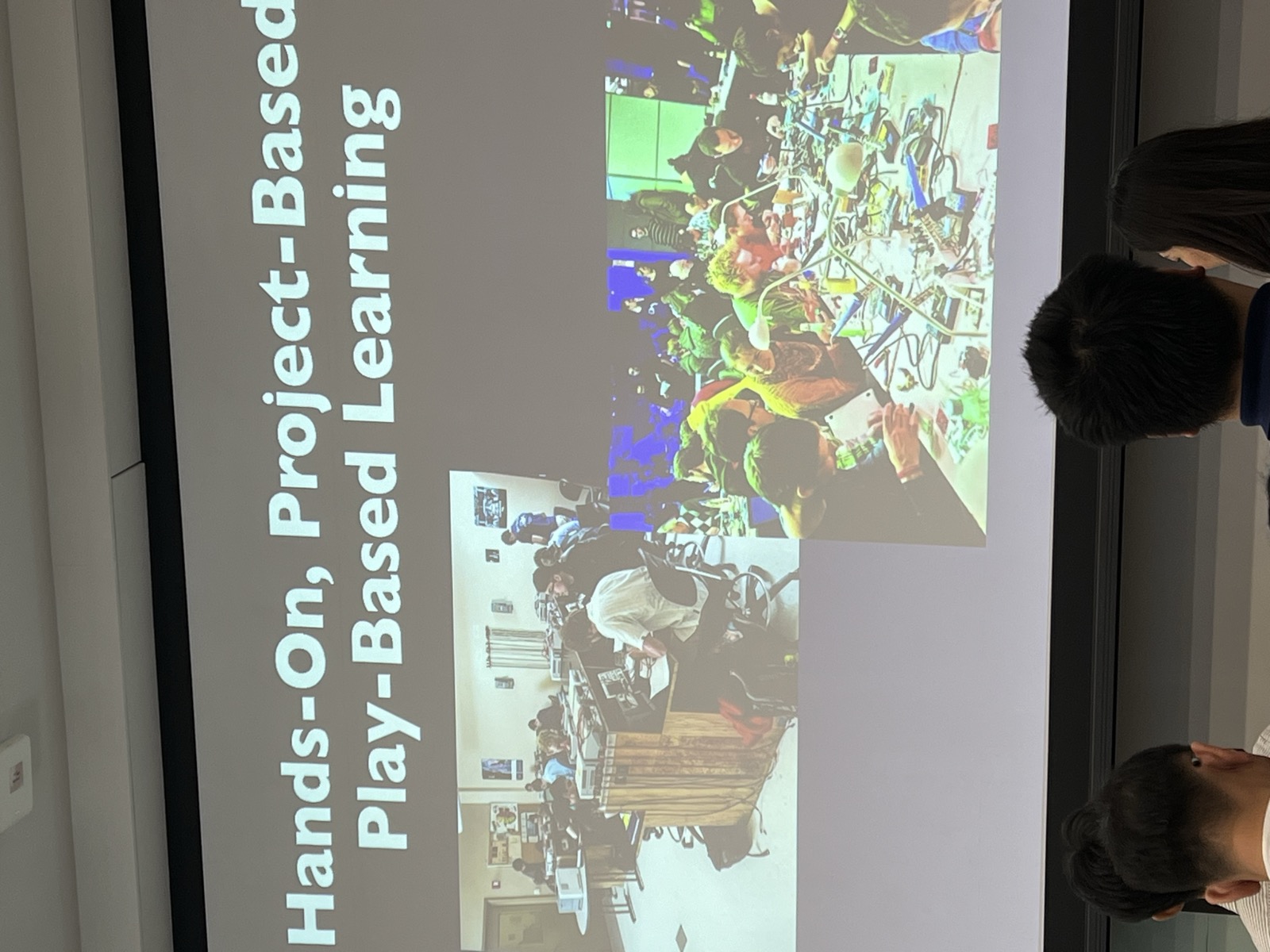
- Knowledge sharing. Hands-on, project-based, play-based learning. Not courses with certificates, but people showing each other how things work.
- Accessibility. Low-cost open hardware means designs are shared freely. Anyone can build, modify, and improve them. A hackerspace provides the tools and community to actually do it.
Each hackerspace is unique, but they all help each other. The global network means designs, knowledge, and techniques flow freely between spaces.
Hackerspaces in Thailand#
Thailand doesn’t really have hackerspaces in the traditional sense. Here’s what I could find:
Chiang Mai has the closest thing:
- Makerspace Thailand – a well-equipped space with laser cutters, 3D printers, CNC machines, soldering stations, and woodworking tools. Open Tuesday-Saturday.
- Hackamai – a community-run group of indie makers, coders, designers, and hardware hackers. Weekly co-working meetups on Thursdays.
Bangkok has no hackerspaces that I could find. The closest option is FabCafe Bangkok – a maker space cafe with fabrication equipment available for rent. Not a hackerspace, but at least a place with tools.
This feels like a gap worth filling – especially for a city the size of Bangkok.
How to find or start one#
hackerspaces.org maintains a global directory. If there’s no hackerspace near you, the wiki also has patterns and guides for starting one. The barrier is lower than you’d think – you need a room, a few people who want to make things, and a willingness to share.
Links#
- hackerspaces.org – global directory and wiki
- Noisebridge – Mitch’s hackerspace in San Francisco
- Mitch Altman on Wikipedia
- https://eventyay.com/e/88882f3e